 By Lee Jonson
Introduction: Software—The Silent Force Behind Progress
In the orchestra of modern life, hardware often takes the spotlight—sleek devices, dazzling screens, and cutting-edge machinery. Yet behind these tangible marvels hums a silent but all-powerful conductor: software. From the moment we wake to a smartphone alarm to the time we unwind with a streaming service, software mediates, enhances, and quietly governs our daily existence. To grasp the true scope of software is to understand not just lines of code, but the philosophy, creativity, and ingenuity that shape how humans and machines interact in an increasingly digital age.
Defining Software: More Than Just Code
At its simplest, software is a collection of instructions that tells hardware what to do. But reducing it to that alone misses the artistry involved. Software is logic in motion—a translation of human thought into repeatable, automated actions that solve problems, entertain, connect, and transform.
Two Core Categories
While software comes in countless forms, it broadly falls into two categories
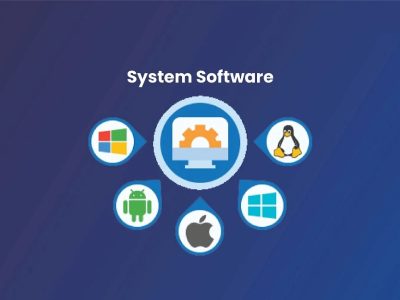
1. System Software
This includes operating systems like Windows, macOS, or Linux. It provides the backbone, enabling hardware components to communicate and function as a cohesive whole.
2. Application Software
These are the programs designed for end users. Word processors, web browsers, design tools, gaming platforms, and mobile apps all fall under this umbrella.
Together, system and application software create an ecosystem that bridges silicon and human ambition.
A Brief History: From Mainframes to Microchips
Understanding software’s impact requires a glance back at its origins. In the mid-20th century, software was an arcane domain, written by pioneers who punched instructions into massive machines with limited memory. Code was physical—stored on punch cards—and programming was the realm of mathematicians and engineers.
The advent of personal computing in the 1980s shifted software from laboratory to living room. Graphical user interfaces, pioneered by innovators like Xerox PARC and popularized by Apple, made software accessible to non-experts. The 1990s saw the explosive rise of the internet, which transformed software into a bridge connecting millions globally. Open-source communities blossomed, proving that collaborative coding could rival corporate giants.
Today, we stand at the frontier of artificial intelligence, cloud computing, and the Internet of Things—an era where software does not just run on devices, but lives in the cloud and adapts dynamically to our needs.
How Software Shapes Industries
Modern industries are inconceivable without robust software systems. From healthcare to finance, entertainment to education, software is the hidden scaffold holding entire sectors aloft.
Healthcare
-
Electronic health records streamline patient care
-
Medical imaging software assists diagnostics with remarkable precision
-
Telemedicine apps connect patients with doctors across continents
Finance
-
Algorithmic trading executes complex strategies in milliseconds
-
Mobile banking apps give users unprecedented control over their money
-
Fraud detection software protects billions in transactions daily
Entertainment
-
Streaming services curate personalized content using sophisticated recommendation algorithms
-
Video game engines render breathtaking virtual worlds in real time
-
Digital audio workstations empower musicians to produce studio-quality work from home
Education
-
Learning management systems bring classrooms online
-
Interactive software tailors lessons to each student’s pace
-
Collaboration tools make remote learning seamless and engaging
Software has become the quiet backbone of innovation—so ubiquitous we often fail to notice its presence.
The Art and Science of Software Development
Behind every app, platform, or tool lies a carefully choreographed process. Software development is equal parts engineering and artistry.
Key Stages of Development
-
Planning: Defining what problems the software will solve
-
Design: Crafting intuitive user interfaces and logical architecture
-
Coding: Translating concepts into functioning code using languages like Python, Java, or C++
-
Testing: Ensuring functionality, security, and performance meet rigorous standards
-
Deployment and Maintenance: Launching software and refining it based on real-world use
Modern methodologies like Agile and DevOps prioritize collaboration, rapid iteration, and constant feedback—reflecting an industry that evolves faster than ever.
The Power and Responsibility of Software
As software’s reach extends, so too does its influence—and its ethical weight. Software is no longer just about convenience or productivity. It now holds real power to shape societies, economies, and individual lives.
Considerations for Ethical Development
-
Privacy: Apps must handle user data responsibly, respecting consent and security
-
Bias: Algorithms should be designed to reduce, not reinforce, human prejudices
-
Sustainability: Energy-efficient coding and mindful design can help reduce technology’s carbon footprint
-
Accessibility: Software should be inclusive, ensuring people of all abilities can benefit equally
The line between developer and user is blurring, with open-source platforms inviting more voices into how software is built and used.
Emerging Trends: What Lies Ahead
Tomorrow’s software will be defined by innovations that expand what’s possible today.
Artificial Intelligence and Machine Learning
Software is becoming self-improving, capable of learning from vast datasets and making decisions that mimic human reasoning.
Cloud Computing
Storage and processing increasingly move off local devices to massive remote servers, enabling seamless collaboration and powerful applications without heavyweight hardware.
Edge Computing
In contrast, edge computing brings processing closer to where data is generated—essential for real-time applications like autonomous vehicles or smart cities.
Low-Code and No-Code Platforms
Software creation is no longer restricted to professional developers. Tools that allow non-coders to build applications democratize innovation and speed up digital transformation.
The Human Element: Creativity Meets Code
At the heart of software is not the machine but the mind. It is people—curious, persistent, imaginative—who shape each line of code into tools that delight, empower, and inspire.
For every flashy app or complex system lies hours of collaboration, problem-solving, and relentless refinement. It is a testament to our uniquely human drive to make life simpler, more connected, and more meaningful.
Conclusion: The Future is Written in Software
As we navigate deeper into the digital century, one thing is certain—software will remain our invisible engine, quietly orchestrating progress behind every click, swipe, and tap. To understand it is to see our world more clearly. To master it is to hold the keys to shaping what comes next.
In the end, software is not just code. It is possibility made tangible—a silent force that turns human dreams into everyday realities, one algorithm at a time.